Apple Developer Academy · Cohort 9
I make iPhone apps, and occasionally a machine that talks to one.
Five projects at the Apple Developer Academy this year — four iOS apps, and one device that grades fruit on a farm.
Every project here does the same thing: it turns what one person just knows into something anyone can read.
Now in Tangerang, finishing Cohort 9. Alongside it I run six consumer brands and Skillary, a learning platform I built and still maintain.
Information Systems graduate. I run six food brands and a learning platform. For two years I stood behind a counter watching people misread a menu I wrote myself, so I know what a badly designed process costs.
IoT & hardware · Team of six
Family product · Group project
Accessibility · Group project
User research · Group project
Solo build · On my own
Challenge 5 · team of six
Two people, one orange, two different grades.
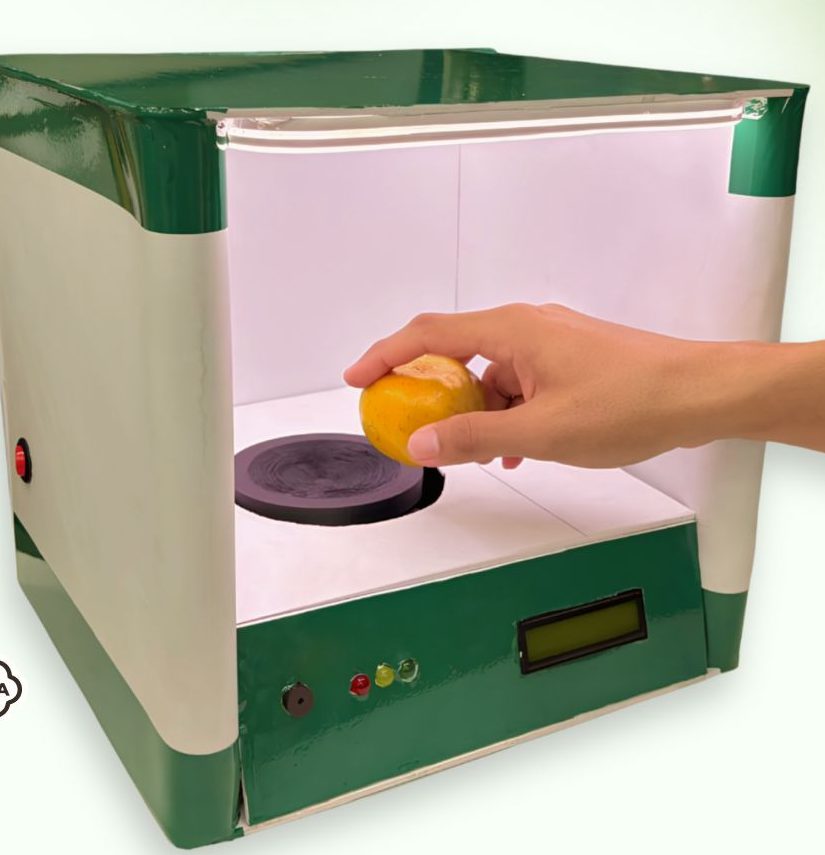
The box. Load cell under the platform, camera above it, LCD and three lamps on the front for the person standing there.
Watched at BIKI, our partner farm
Five people grading by eye and by hand. Which means the same fruit can leave as grade A in one person's hands and grade B in another's, and nobody further down the line can tell which happened.
This is not carelessness. Nobody holds one standard steady for two tons in two hours. There was no instrument, so there was no standard.
What we had to make measurable was exactly what they were already judging: weight, colour, and the state of the skin. Just with nothing to check it against.
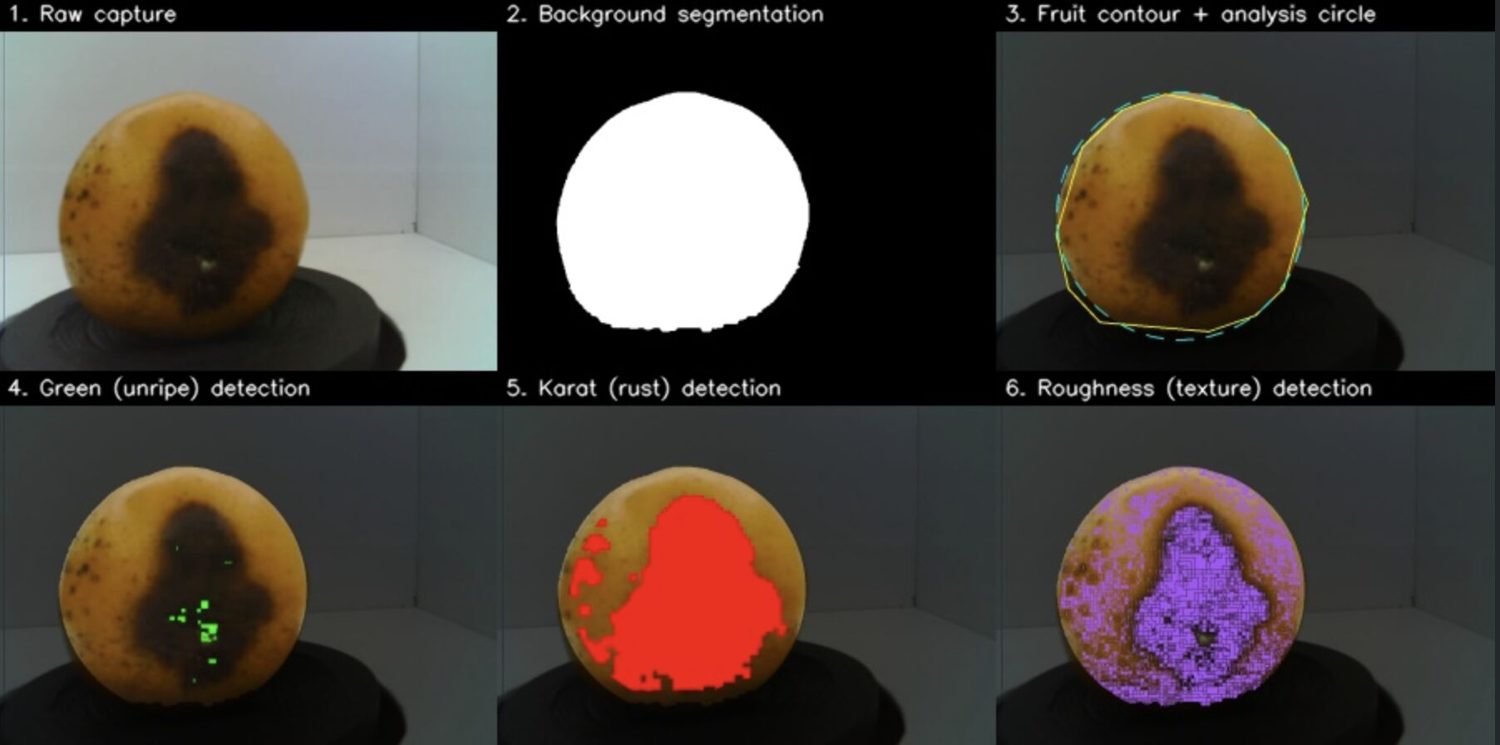
Colour and skin, made checkable: the fruit is cut out from the background, then measured for green, for rust, and for how rough the surface is. Weight comes from the load cell underneath.
What runs the vision
Raspberry Pi
ESP32-C6 + ESP32-CAM
The price made it something a farm would never buy. That constraint is what made the project real.
What the operator sees
Raw sensor readings
One letter, one reason
We watched how fast people work at that table, then cut everything else.
Three power supplies burned out along the way. That never happened when I was building apps.
Operator
Places the fruit
The load cell and camera catch what the eye was guessing at
·
Grading runs
One standard on every fruit instead of five
Operator
Reads the grade
The answer arrives at the table, where the work is
·
Every result saved
The day becomes something you can look back at
Supervisor
Watches it live
Sees the line without standing on it. My part.
I was the one who went to the farm and asked the questions, so I was the one who knew best what actually needed to appear on a supervisor's screen. That is why I built the screen too.
The hardware is what people notice. But a farm does not buy sensors. It buys the ability to trust what left that table, and that trust gets delivered at two ends: the display the operator reads, and the dashboard the supervisor watches.
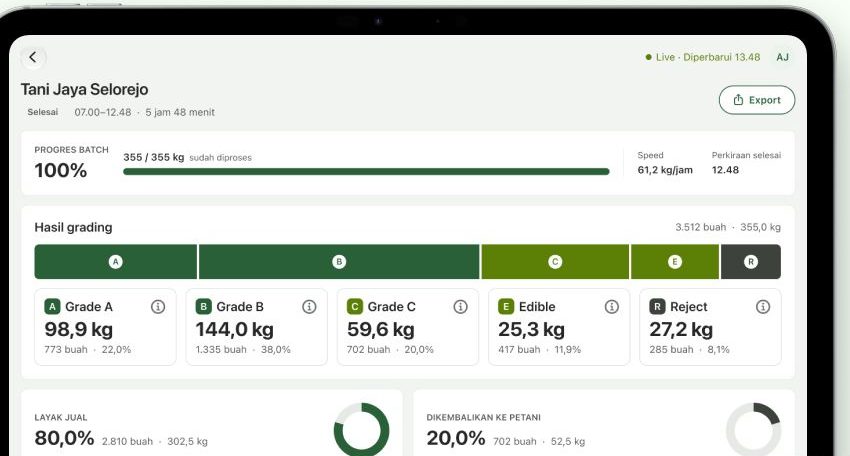
The supervisor screen, my part. Batch progress, the grade split, and how much of the load a buyer will take.
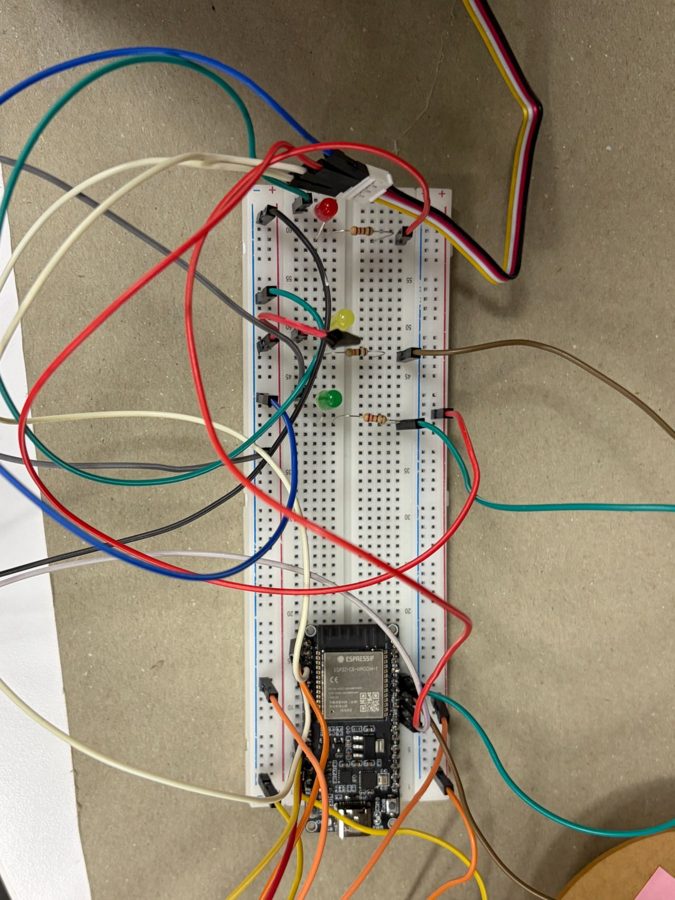
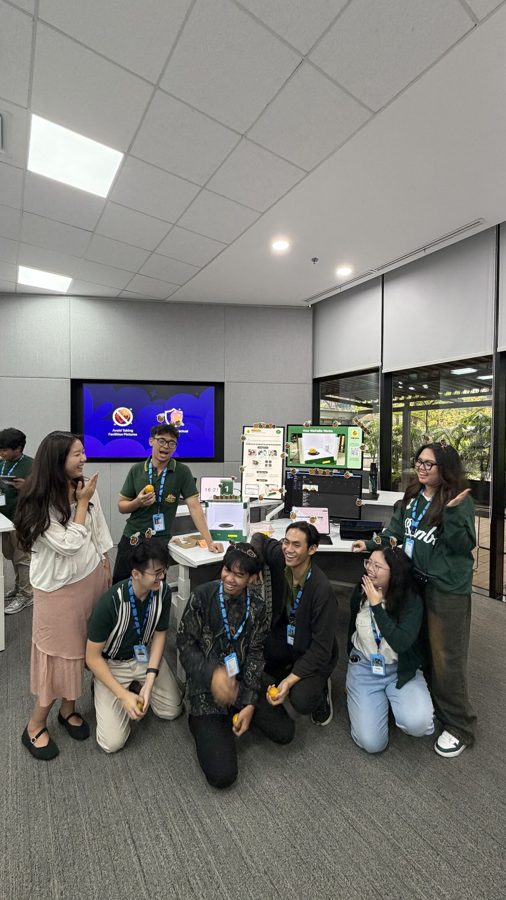
Left: the same three lamps, before there was a box around them. Right: demo day.
We ran it for a demo, not for a full working day. Whether the grading holds at hour six is what I would test next, and we have not tested it. No accuracy figure appears on this page, because we never measured one.
Challenge 4 · Urban Innovation
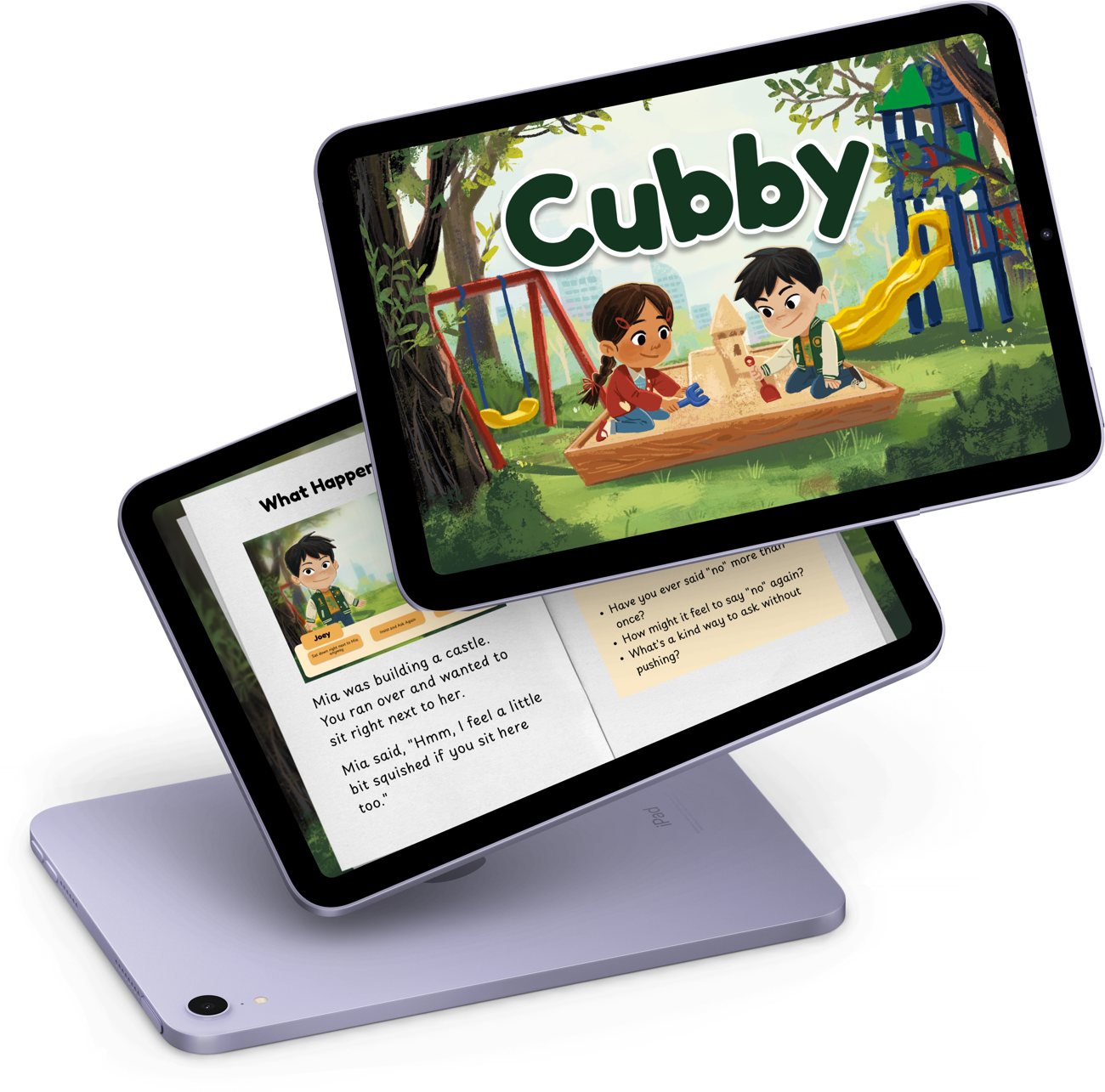
A game two people play together, so a hard conversation gets a rehearsal.


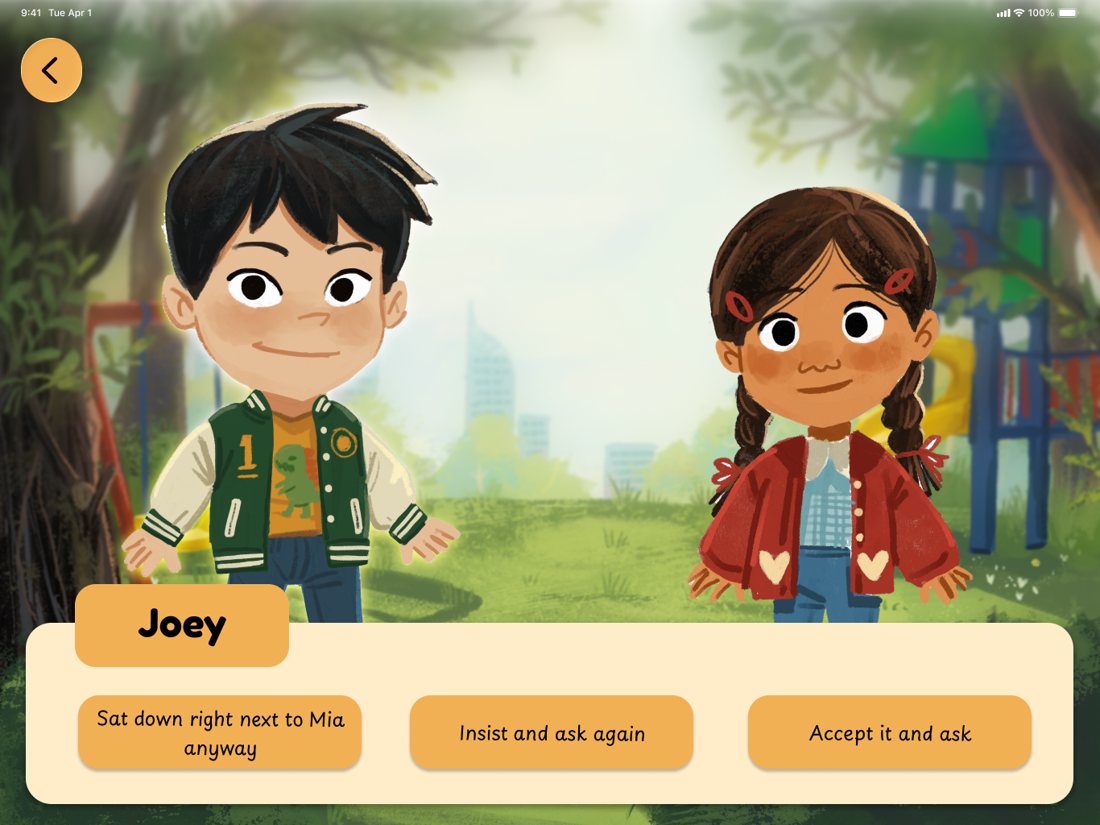
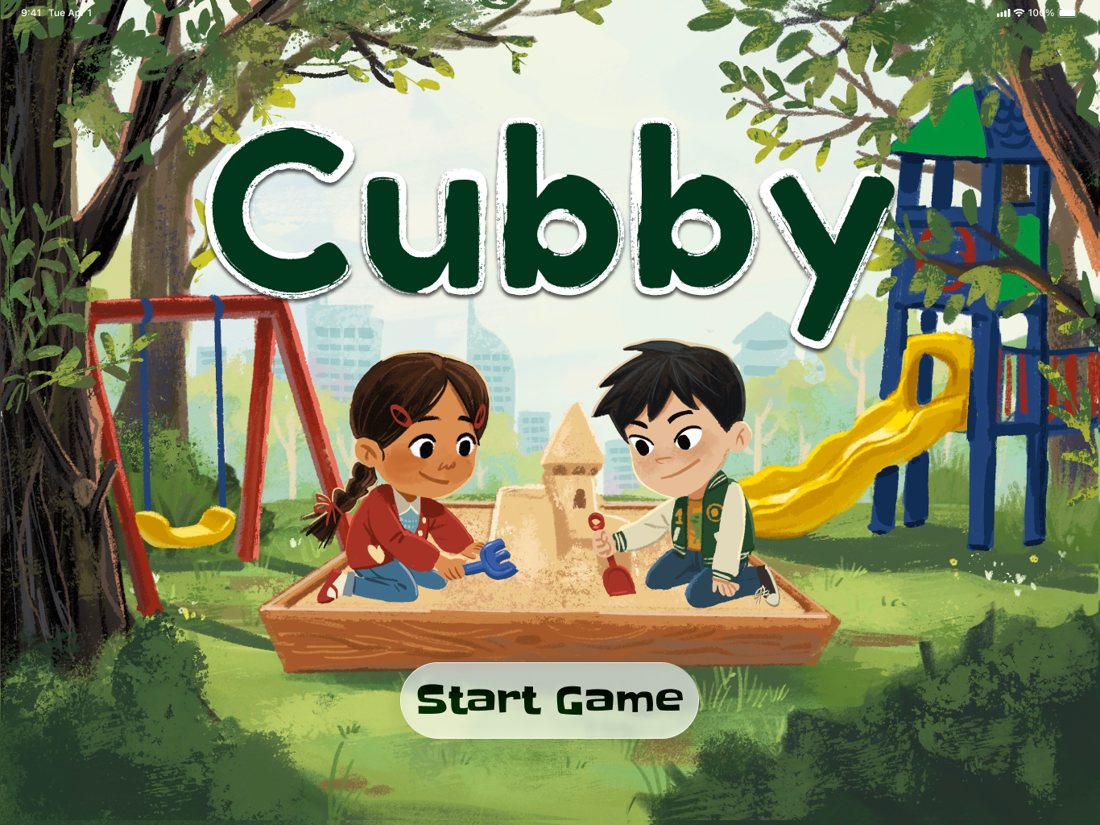
Left: where it opens. Right: Joey has asked to sit next to Mia, and Mia has said she would feel a little squished. The child picks what Joey does next — sit down anyway, insist and ask again, or accept it and ask something else.
We interviewed parents, a child psychologist and a paediatrician. What came back was not a knowledge gap. Parents knew what to say. They just found saying it awkward, so the conversation kept not happening.
So Cubby stopped explaining and became a game. A narrated scenario in a park or a street, the child chooses what to do, the parent guides, and a story book afterwards lets them look back at the choices together.
One screen, two players, two reading levels. That constraint shaped every decision I made.
Not mine
Illustration, narration and the SpriteKit scene work belong to my teammates. The interface is the part I owned.

Afterwards the same scene comes back as a story book, with Mia's words written out and three questions beside it: have you ever said no more than once, how might it feel to say it again, what is a kind way to ask without pushing.
Three more challenges from the same year, in short.
Challenge 3 · group project
The app became useful once it got smaller.
Design, accessibility and scope · iOS · Hallway tested · Working prototype


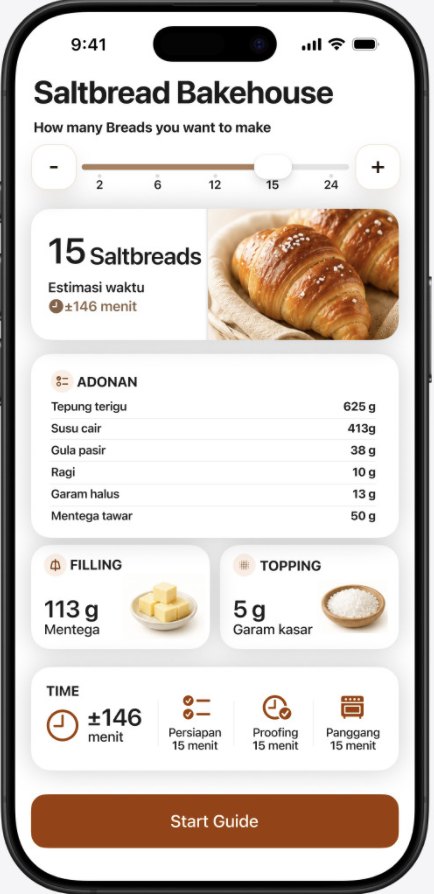
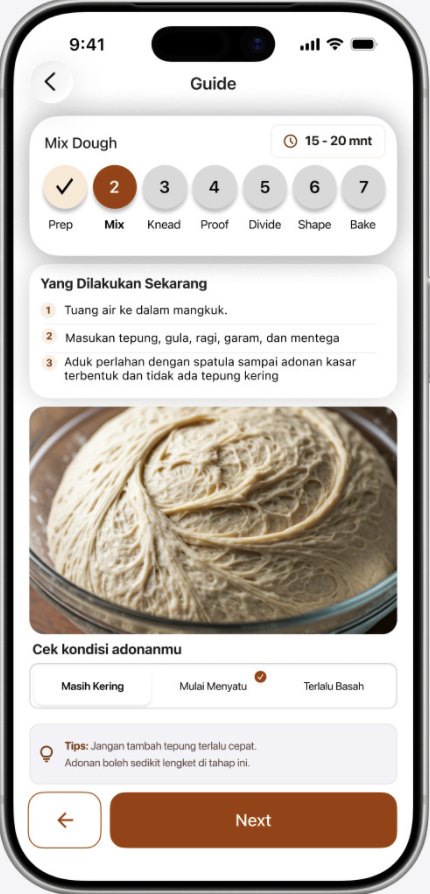
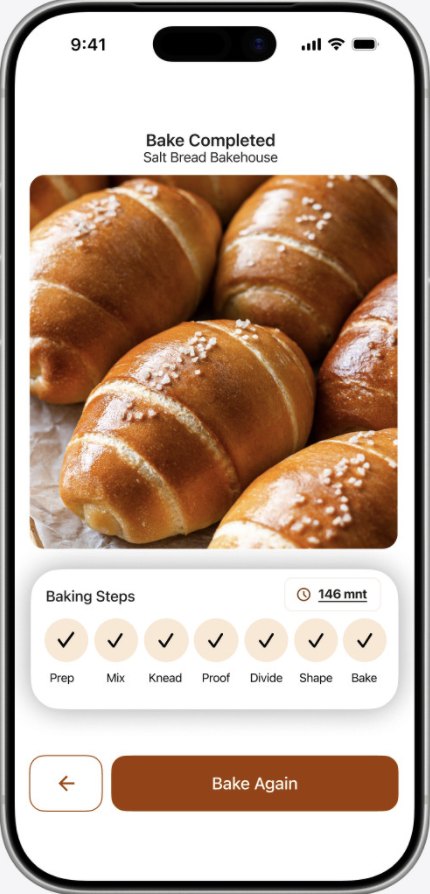
Set the batch size and the grams recalculate. Then one stage at a time: what to do now, a photo of what it should look like, and three buttons for which one you are actually looking at — still dry, coming together, too wet. Interface is in Indonesian; the bakers we tested with are.
Challenge 2 · group project
I asked seven bakers. The answers split in two.
Research and synthesis · iOS · 4 beginners and 3 professionals interviewed


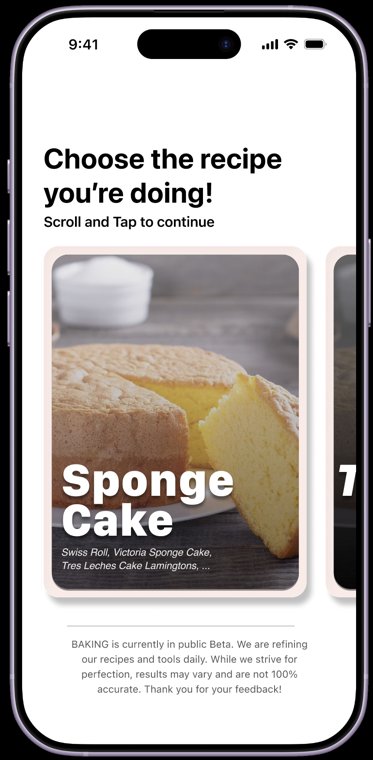
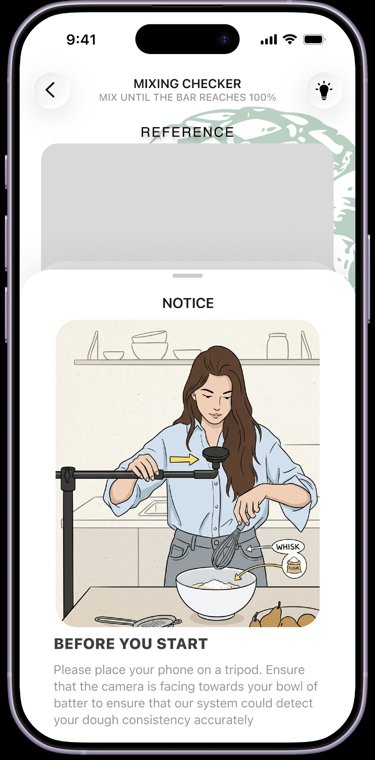
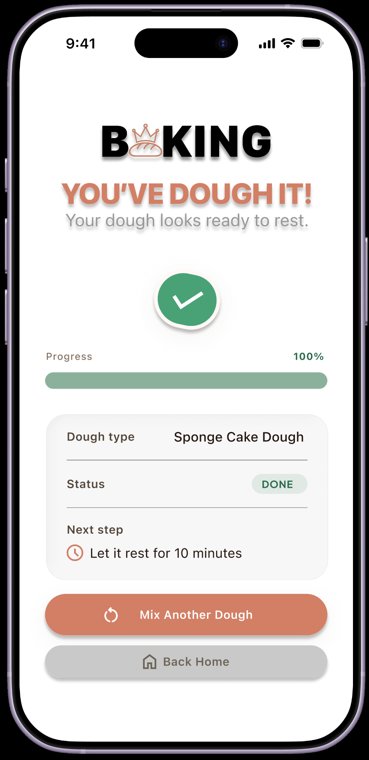
Pick the recipe, prop the phone on a tripod so the camera can see the bowl, and mix until the bar fills. The app tells you in its own words that it is in beta and can be wrong.
Challenge 1 · on my own
Scope, flow, interface, implementation — all mine, mistakes included.
Everything · Solo build · iOS · Offline-first · Working prototype

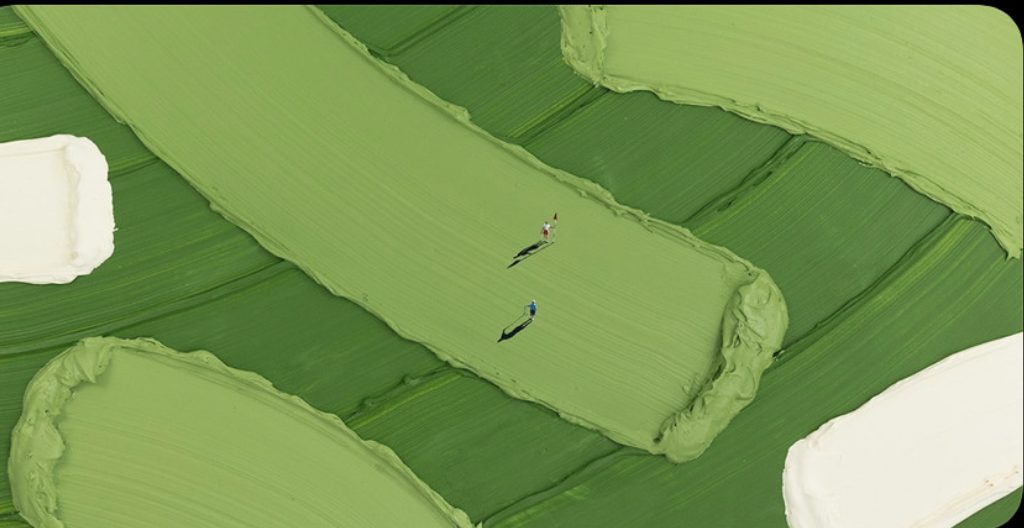
A finished piece. The surface is painted first, then figures are placed on top of it.


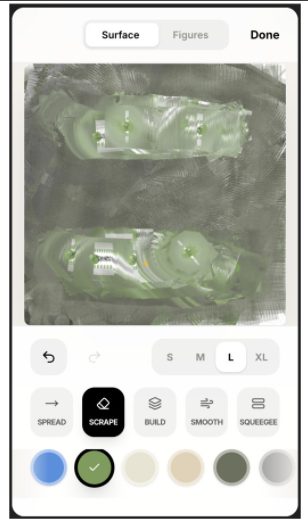
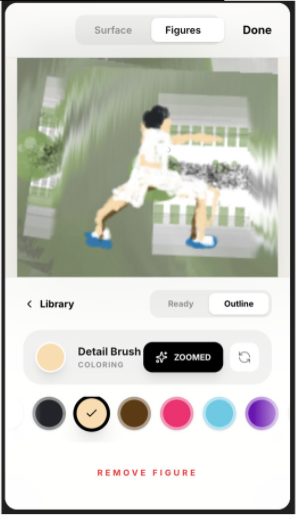
Two tabs, and that is the whole app. Surface: five knife actions and four sizes. Figures: place one, colour it, remove it.
Build
Design
Research
Data
Certifications
Gemini Certified Educator, Google for Education (2025) · Azure AI Fundamentals AI-900, Microsoft (2025) · Coding Camp 2025, DBS Foundation × Dicoding — Machine Learning cohort.
Also running
Six food brands since 2024. I wrote the SOPs, and I also watched people misread a menu I wrote myself. Skillary, a learning platform I own end to end. Database administration taught in English to eleven international-class students. Machine Learning Engineer on NusaKue, deployed.
An operations problem reads to me before a technical one does. That is the part of this I did not learn at the Academy.
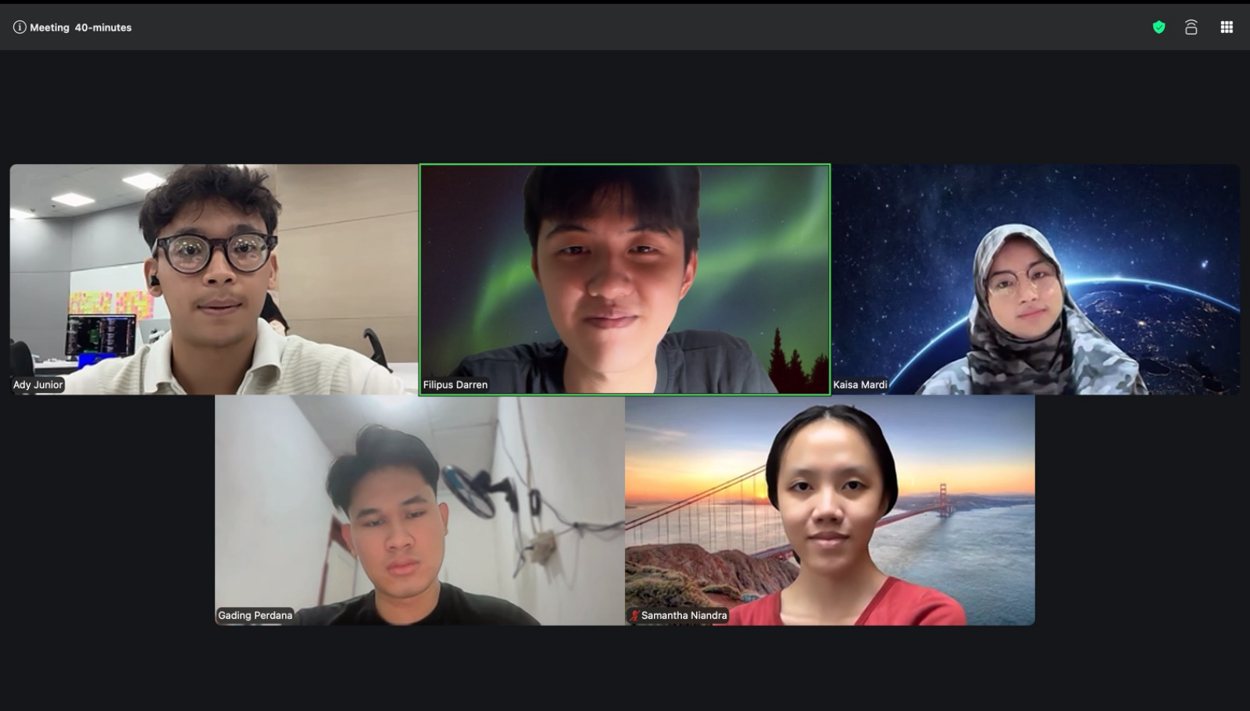
Five of us went through each other's CV and portfolio, online, before any of it was submitted.

The session. I am top left.